The Economy of Looking
On the male gaze, the algorithm that monetised it, and the audience that keeps it running.
Let us be honest about what we are looking at.
A handful of platforms, owned by a smaller handful of companies, now compete for the most valuable commodity in the global economy. Not oil. Not data. Attention. Specifically, the attention of human beings staring at glass rectangles between waking and sleeping, for an average, depending on the country and the year, of somewhere between four and seven hours a day. The companies that have built these platforms have run a global experiment, for nearly two decades, on what keeps the human eye on the screen. They have found their answer. The answer is the female body, photographed, filmed, filtered, looped, and pushed through an algorithm tuned to a single objective. Watch time.
This is not a moral observation. It is an economic one. Whether you think it is good or bad, the architecture is built. The numbers are public. The platforms make most of their money by selling advertising against content, the content that retains the most attention is content that activates a particular response in a particular audience, and that response, more reliably than any other variable the engineers have measured, is the response of heterosexual men to images of women. The system has been refined relentlessly toward this discovery. It is now extraordinarily good at it.
So when we talk about the so-called male gaze economy, we are not making a vague cultural complaint. We are describing the load-bearing wall of one of the largest industries on earth.
The question is not whether this is happening. It plainly is. The question is who is responsible for it, and that question is where almost every commentator on this subject gets it wrong.
Consider how the conversation usually goes. A new starlet posts a provocative photograph. The internet responds in two predictable directions. The conservative side condemns the woman. She has chosen this. She has degraded herself. She is responsible for what young girls are now imitating. The progressive side defends her. She has chosen this. It is her body. Critique of her choice is patriarchal. Both sides spend their full energy on her individual decision, and both sides leave the actual machine untouched.
Take three names, briefly, as case studies of how the same system uses different individuals. Kim Kardashian, who turned reality television fame into an empire by understanding, earlier than her peers, that the photograph was the product. Sydney Sweeney, a working actress whose public persona has been increasingly shaped by what the algorithm rewards rather than what her acting career might require. Or, on the other side of the world, the rotating cast of Pakistani and Indian TikTok personalities whose ten-second videos have made them, briefly, more famous than journalists who have spent forty years on the same beat. These three examples have almost nothing in common as people. They have everything in common as data. Each is a particular configuration of features that produces engagement on a particular platform. Remove any one of them from the system tomorrow, and the slot they occupy is filled by Friday. The machine does not care which woman runs the algorithm. The machine cares only that someone does.
This is what almost no commentator on the subject is willing to say plainly. The women are not the system. They are the most visible workers inside it. The system was built around them, not by them, and the people who built it are not the people in the photographs. The people who built it work in Menlo Park and Cupertino and Beijing. They are mostly men. They have stock options.
If you really want to assign blame for the attention economy, start there.
But there is a second group that almost no one in this conversation puts in the dock, and that group is much larger. The audience.
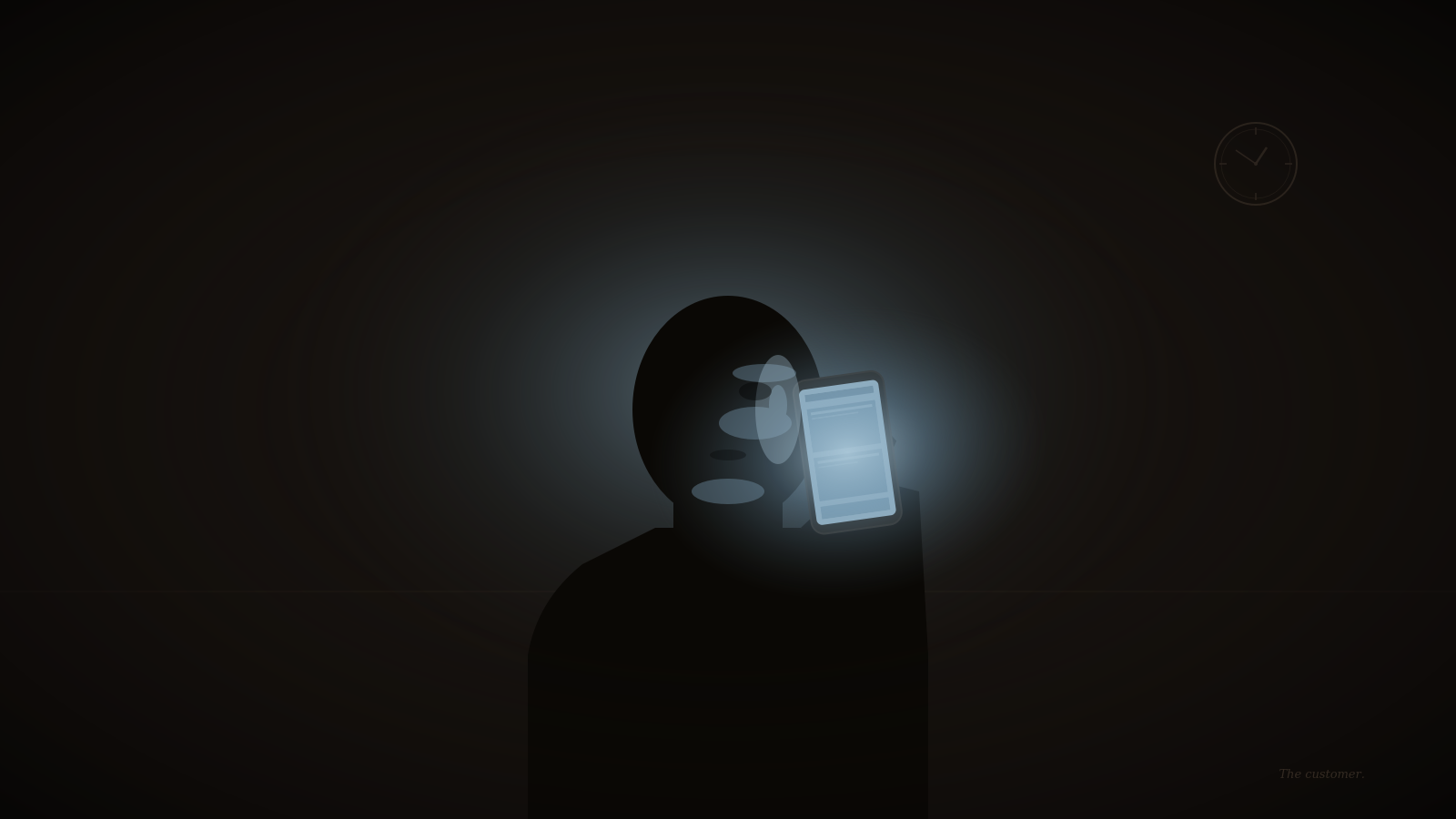
The economy of the male gaze cannot function for a single quarter without men opening apps and looking. The advertising sold against the content is sold on the basis of a known consumer who reliably consumes. That consumer is, at the most engaged tier, a man with a phone. Hundreds of millions of him. He is the one whose scrolling makes the whole machine profitable. The platforms know this. The advertisers know this. He knows this, in the way that people know things they do not say out loud. And yet every think piece on this subject treats him as a background detail, when he is in fact the entire market.
This is the structural fact that most cultural critics avoid. The male audience is not a victim of the algorithm. The male audience is the customer. The algorithm is doing what the algorithm is doing because the customer keeps buying. The women on the screen are not selling themselves to a passive crowd. The crowd is paying with its attention, and the platforms are converting that attention into thirty-billion-dollar valuations.
What does this do, downstream, to the culture? Predictably, it hollows things out.
Books are read less. Films of any complexity struggle to find audiences. Long-form journalism contracts each year. The capacity for sustained attention, in adolescents and in adults, measurably declines. Relationships suffer in ways that the participants find difficult to articulate, because what is happening is not an affair but a recalibration. The phone is the third presence in every modern partnership, and the third presence does not lose. The way men learn to see women, after enough years of scrolling, drifts. Not into predation. Into something flatter. A kind of permanent low-grade comparison shopping, conducted silently, in the mind, against an inventory updated every thirty seconds for free. This is not a moral failure. It is a trained reflex. Train any species long enough on any stimulus and you will get the same result.
The platforms know this too. They have internal research on it. Some of that research has leaked. The cynicism is not even hidden anymore.
So what do we do.
Almost every honest answer to that question is unsatisfying. Delete the apps. Read more books. Talk to your wife. Walk in the evenings without a phone. All true. All useless. The people willing to take that advice are already taking it, and the rest of us, including me, open the same app again tomorrow morning.
What I would offer, instead, is something smaller. Stop treating the women on the screen as the story. They are not the story. The story is the algorithm, and the men who keep it running, and the small daily damage being done to a generation of human attention by a business model that nobody voted for and almost nobody can defend in public.
Name that, accurately, and you have done more than ninety percent of the writing on this subject. Name it once a year, in different language, until enough people understand the architecture they are standing inside. That is the only useful work left for cultural critics on this beat.
Everything else is taking part in the economy you are pretending to condemn.
— Hassan
Letters, occasionally
"Subscribe to receive the next entry when it lands."